Friday, 5 December 2014

Gringo Pricing

Gringo Pricing 

On a recent drive I stopped at a small store, to buy a bottle of soda.
The person in front of me was buying the very same thing.
But when it came to me paying for it that was a very different thing, even though the label on the bottle said $1.00 and the person in front of me paid $1.00.
I was told that the cost was $2.00, so I said that I only am buying one bottle, the response was $2.00.
What looked like the son of the owner just sold another bottle of the same to a local at the price marked on the bottle, with that I gave the bottle to the owner and said, you know how to treat your customers, and left.


2017 End Extreme Poverty

Quito, Nov 27 (Prensa Latina) Ecuador plans to eradicate extrema poverty by 2017 through a nationwide strategy presented today in this capital by the National Department of Planning and Development (Senplades) and other institutions.
In the presentation ceremony of the National Strategy for Equality and the Eradication of Poverty, attended by government authorities, the Head of Senplades, Pabel Munoz, said that the most important to achieve the goal is the radical political will to address the phenomenon, as the objective is to wipe out the scourge completely.

He added that after curbing poverty by 12 percent and improve equality by seven percent in the past few years, the country is in a position to achieve the said target by 2017.

In remarks to journalists, he said that the commitment of the national government is essential to achieve the goal, but this responsibility must also be shared by the decentralized autonomous governments, the private sector and all the citizens.

Minister Coordinator of Human Talent, Guillaume Long, highlighted the importance of education to break the cycle of poverty.


Ecuador's internet penetration reaches 72%


Ecuador seizes climate bus opposed to drilling

Check out this link 


Ecuador siezes climate bus opposed to drilling | World News |Axisoflogic.com
opposed

Wednesday, 17 September 2014

Tablets for kids

Tablets for kids


Only a short time ago, I mentioned that the government had imposed an additional tax on the internet and cell phone providers.
Well, just last week it came to my attention that provisions have been made in the 2015 budget to spend that windfall in two ways.
 First, there is a start up company in the Quito area that is producing tablets for the android market. As yet I have not seen one, nor have I seen any advertising for the product.
You can see where I am going; by the new year they should be in a position to ship.
In the new year, the government has made a commitment to provide 1 million tablets to the schools in Ecuador.
Not only is this a bold move, but is it also a gamble?
Will the company be able to provide the number of tablets required within that year?
How will the tablets be distributed, and will the tablets slot into the current teaching methods?
As this is a start up company, will they be able to provide the support for the tablets with firmware and software?
Now you know where that extra 3% tax is going next year.


Fall Seven Times, Get up Eight: The Japanese War Brides

Three daughters tell the story of Japanese women who landed in 1950s America -- the brides of young GIs brought home from an enemy nation.
This is a peek into the modern history of America. In trying to make this film, these 3 women have released some of the lesser known outcomes of the second world war.
The three ladies have put tremendous effort into painstakingly sifting through material that is slowly being eroded by time, and a generation that is fading.
These ladies need a little help to finish this project. Please go to the link and find out more. 

https://www.kickstarter.com/projects/528473920/fall-seven-times-get-up-eight-the-japanese-war-bri


Wednesday, 10 September 2014

Brunch


Thank you to our clients concerned about our cancellation of last brunch.

Specially in the low season we highly recommend booking 24 hours ahead, so we are able to accommodate your needs.

We have worked this way since we started, although not all of you have booked before, we always have required a minimum of 10 reservations for be able to open.
Thanks for your understanding.
Place  :  Big Ralph´s Restaurant
Time   :  9.30 - 12.00
Date   :  Sunday 14th / Sep

BRUNCH MENU

CLASSIC EGGS BENEDICT WITH HOLLANDAISE SAUCE  
$ 6.25

SMOKED SALMON & SCRAMBLED EGGS ON TOASTED WHEAT B. BREAD
$ 7.00

ENGLISH MUFFIN TOPPED WITH TOMATO,
LETTUCE & FILLET STEAK AND ONION RINGS
$ 13.50

BACON, CHEESE & MUSHROOMS QUICHE WITH GREEN BEAN DRESSING
$ 7.00

GRILLED CHICKEN CAESAR SALAD
$ 7.70

EGG OMELETTE WITH MUSHROOMS, CHEESE & HAM
$ 5.75

DESSERT OF THE DAY
$ 5.95


Best regards


Ing. Andrea Torres

BIG RALPH'S HOSTAL & RESTAURANT
Av. San Lorenzo y Av. Carlos Espinoza Larrea,
(Diagonal a Pizza Express)  Salinas - Santa Elena, Ecuador
(00593) 42930910 / 0996188111
Horario de atención: Mie - Sab 18H00 - 21H30
http://www.bigralphhostal.com/

Sunday, 7 September 2014

Rampant

Rampant


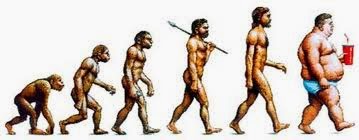
Rampant. This is the word used to describe the increase in Ecuador of this modern world disease.
Obesity  
Over the last ten years, the exposure of Ecuador and other advancing countries has brought with it some of the pitfalls:the proliferation of the fast food or the takeaway.
As these countries move away from the traditional industries and take up more of the ways of the modern world, such as that of the USA, there has been an increase in the incidence of obesity.
The increased intake of sugar, fats, carbonated drinks, and sodium, have with the change in lifestyle produced a cocktail of the modern life drawbacks that have outpaced the country's ability to address.
Hence, the speech last week by the President of Ecuador to  implement a tax on the fast food industry.
Obesity and diabetes are crippling enough, but when a recorded increase in both over the last ten years of 75% has been seen, the time is right to take action.
Changes in lifestyle and work habits have contributed to this dilemma.
But so has the fast food industry, with smart advertising and supersizing of meals, their contribution is measurable.
They are not the only culprit. Here (Ecuador), it is hard to find drinks in the stores that have sugar contents below 25 mg., and foods that have alarmingly high levels of sodium.
Some may say that this is a choice, but you just have to look at the US to see what has been going on there. Processed foods, fast food chains, and big conglomerates target the low income with poor life quality food and drinks.
The same thing has been going on here; but the difference here is the ability to deal with it. Over the last six years, money has been diverted to the health care system, infrastructure, and education.
The food revolution that has taken place was not a consequence foreseen. In the last year, we have seen that labeling of food products has been improved and brought into line with the EU.
Warning labels are now seen on carbonated drinks, public information ads are shown on the TV and heard on radio.
This last week with the speech made by the President, indicating that he will introduce a fat tax on the fast food industry may help, but the damage has been done for this generation.
The pains of a country wanting to move up and improve the social, educational and health of its people are demonstrated by problems such as this, but they can be overcome.  

Saturday, 30 August 2014

Throat of Fire

Throat of Fire


A few days ago, if you happened to be in the Banos area, this is what you could see.
The volcano named Tungurahua.
The throat of fire is the translation from the local dialect.


This was found next to a 5 gallon gas can.


How would you like to find this on your bed?


If anyone can tell us what this insect is, please do so!  Thank you.
Ii nnnnn


Wednesday, 20 August 2014

Ecuador, The way to go?

Ecuador, The way to go?


Under the banner "Latin America News" the Wall Street Journal has poured out its pain that the people of Ecuador might reelect President Rafael Correa. The article is actually an editorial attacking Correa and the people of Ecuador for potentially voting to reelect Ecuador's most successful President in the modern era.
The issue is term limits. I have always opposed term limits as an obstruction to democracy and competence. The U.S. had no presidential term limits for most of its history and the only president the population chose to elect to more than two terms was Franklin Delano Roosevelt -- one of our greatest presidents. I am deeply thankful that our Nation had the great good sense to reelect FDR to four terms in office.
Term limits are an issue on which reasonable people should be able to disagree without rancor. Rupert Murdoch and his reporters do not fall within that category and they despise Correa Ecuador's success and Correa's popularity falsify their ideological claims that democratic government is the problem and plutocracy is the solution. The WSJ is enraged that that Ecuador's democratically-elected parliament might remove term limits for public officials. The faux "news" story launches this fact-free smear: "Mr. Correa, whom opponents characterize as a semi-authoritarian leader who controls all levers of power." Wow, I'm sure I could find "opponents" of every elected leader in the world who would say far worse. I'm also sure that the WSJ never ran a "news" story that read "Mr. Bush, whom opponents characterize as a semi-authoritarian leader who controls all levels of power." It turns out that the "opponents" that the WSJ tries to dredge up are political opponents who define winning democratic elections as "authoritarian."
We can test the claim that Correa "controls all levels of power" against the facts. He is the democratically elected president and a majority of the members of the democratically elected Parliament support him. That's the norm in all parliamentary systems that Murdoch loves when conservatives are elected the PMs in Australia, the UK, and Canada. Correa's party also lost democratic elections for mayor in Ecuador's largest cities, so he plainly does not control all levels of power and does not act to prevent his political opponents from winning elections nor does he annul their victories. In Ecuador, the President is not the leader of the party or coalition that controls the parliament and for many years Correa held office with a parliament controlled by the opposition.
The WSJ lets slip the "opposition's" real concerns -- the people of Ecuador strongly support Correa's policies and oppose the return of the oligarchs to power. The oligarchs are desperate to make it impossible for the people of Ecuador to reelect the leader they support.
"Still popular after seven years in office, Mr. Correa, who is 51 years old, would likely win a fourth presidential election in 2017 and remain in power far into the future, analysts and opposition figures believe."
No one describes the oligarchs as "semi-authoritarian" because they, allied with the military, were openly authoritarian. They were also incompetent, often personally corrupt, and betrayers of the people of Ecuador in favor of foreign corporations such as Texaco. In particular, their oil royalty agreements gave only a pittance to Ecuador regardless of the price of oil. One of Correa's first acts as President was to renegotiate those agreements. Together with his rejection of odious debt, another act of economic treason by the oligarchs, these financial steps made it possible for Correa to adopt the policies that produced Ecuador's dual economic and social miracles. Unemployment, poverty, and inequality have all fallen sharply under Correa.
A Nation that was the largest exporter (as a percentage of total population) of its citizens via emigration reversed that tragedy to a net inflow. People voted with their feet under the oligarchs by leaving Ecuador. They are now voting with their feet by returning. The oligarchs are determined to prevent them from voting with their ballots in favor of the leader who brought exceptional competence and results to Ecuador.
The WSJ tries to turn these successes and Correa's popularity into an indictment not only of Correa, but the people of Ecuador.
"Buoyed by high oil prices, Mr. Correa has funneled money into education and highways, giving him high approval ratings, while drawing sharp criticism from rights groups and press freedom advocates for trying to muzzle critics."
The WSJ purports to love "the Washington Consensus" -- which calls for increased public spending on education, health, and infrastructure. Those are precisely Correa's priorities and he has delivered major improvements in each category. That is why Correa is so popular with the people of Ecuador and so hated by the oligarchs who once totally dominated all media and made "press freedom" an oxymoron. Absent Correa's actions on oil royalties and the odious debt "high oil prices" would not have made it possible to produce these tremendous gains in education, health, and infrastructure. The oil proceeds would have simply gone to reward the holders of odious debt and the foreign oil companies.
Correa is an excellent economist and his policies are highly pragmatic. His policies are rooted in Catholic social justice principles. It is a grave mistake to lump the leaders and nations of Latin America together and treat them as clones. It is long past time for President Obama to reach out a hand of friendship to President Correa and the people of Ecuador. Correa and the people of Ecuador have made real Obama's campaign slogan: "S, se puede."


Tuesday, 12 August 2014

Not quite net neutrality

Not quite net neutrality 

Recently, the current president of Ecuador said that the airwaves belong to the people, and then increased the corporate tax to 12% and the profit sharing to 3% for the workers.
The president wants more of the money the corporations make to stay in the country. This money will be used on social and educational projects.
The country's president, Rafael Correa, said that the spectrum belongs to all Ecuadorians and that the use of that spectrum should generate profit for the people.
Movistar, Claro and CNT are in negotiations with the Ecuadorian government to implement 4G service.


View of Salinas from the yacht club


Progress on the Pier


$4.5 B deficit 

In October of this year, Ecuador will be the first country in the world to introduce virtual money.
If you have traveled to Ecuador or live in Ecuador, you will know that the currency here is the US dollar.
There are a few problems with adopting another country's currency that bears some thought .
The first is that you cannot print more money. Paper money wears out, and has to be replaced.
Paper money gets taken out of circulation by hoarders, spent in other countries, and sometimes is destroyed for whatever reason.
This all contributes to a shortage of circulating money in the country.
One solution is to have virtual money. This can be used to pay city and state workers, the military, and state run concerns.
The Ecuadorian central  bank is working with cooperation to accept this currency. What is being asked is, "Will this virtual money have the full backing of the central bank, as is the paper money?"
There should be clarity , and a code of conduct and usage issued by the bank to support this endeavor.